

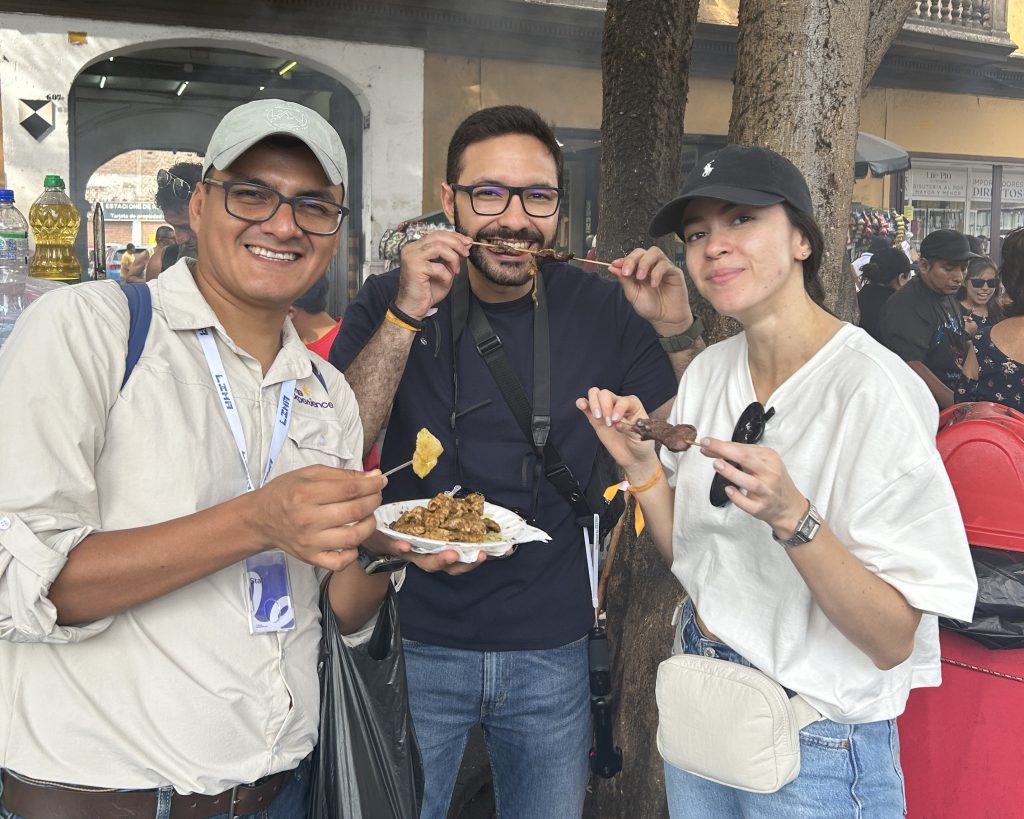
What are anticuchos? They are one of Peru’s most iconic street foods: pieces of marinated beef heart placed on skewers and grilled until smoky, tender and full of flavor.
Walk through Lima in the late afternoon and the smell of anticuchos cooking over a hot grill is difficult to miss. They can be found at traditional restaurants, neighborhood anticucherías and small street stands where they are usually prepared right in front of you.
For many travelers, the words “beef heart” can sound intimidating at first.
But anticuchos are one of those Peruvian foods that often surprise people once they actually try them.
And behind that first bite is a story closely connected with Lima, Afro-Peruvian culture and centuries of culinary change.
What Are Anticuchos Made Of?
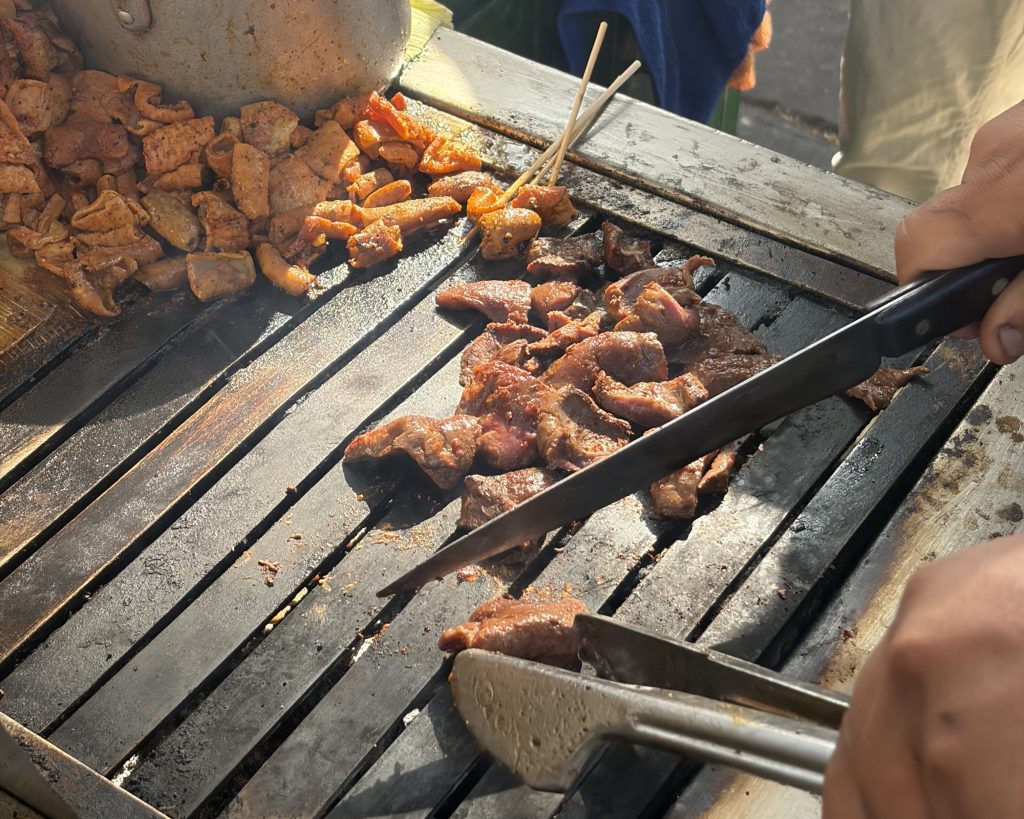
Traditional Peruvian anticuchos are most commonly made with beef heart. The meat is cleaned, cut into pieces and marinated before being placed on wooden skewers and grilled over high heat.
The marinade can vary depending on the cook, but traditional preparations commonly use ingredients such as garlic, cumin, chili peppers, vinegar, salt and pepper.
The result is very different from what many first-time visitors expect.
Beef heart is a muscle, so when it is properly cleaned, marinated and grilled, its texture can be firm but tender rather than soft like other organ meats. The grilling also gives anticuchos one of their most characteristic features: a smoky, slightly charred flavor.
In Peru, they are often served with potatoes, corn and ají sauce.
What Do Anticuchos Taste Like?
Anticuchos have a savory, smoky and slightly tangy flavor.
The meat itself has a richer taste than a regular cut of beef, but it is not overwhelmingly strong. Much of the flavor comes from the marinade and the grill.
Vinegar gives the meat some acidity, spices add warmth and the grill creates those slightly charred edges that make freshly prepared anticuchos so good.
If you are worried that beef heart will have a very intense organ-meat flavor, you might be surprised. When anticuchos are prepared well, the marinade and smoky grilling are usually what you notice first.
And, like many street foods, they are best eaten straight from the grill while they are still hot.
Why Are Anticuchos Made With Beef Heart?
The answer is closely connected with Peruvian history.
Preparations involving skewered and seasoned meat existed in Peru before the arrival of the Spanish. Peru’s official tourism portal notes that meat such as llama was consumed with herbs and chili peppers in pre-Hispanic times.
But the anticucho we recognize today developed later, during the colonial period.
With the introduction of cattle, beef became part of the local food system. Enslaved Africans and their descendants made creative use of cuts and organs that were less valued by colonial elites, including beef offal.
Beef heart eventually became strongly associated with anticuchos, transforming into the grilled skewers that are now recognized throughout Peru.
This history is one reason anticuchos are much more than simply grilled meat.
They also represent adaptation, creativity and the enormous contribution of Afro-Peruvian culture to the food Peru eats today.
The Afro-Peruvian History Behind Anticuchos
Afro-Peruvian influence is essential to understanding the history of anticuchos.
During the colonial period and the early Republic, Afro-Peruvian cooks helped transform ingredients that were often considered less desirable into dishes that eventually became an important part of Peruvian cuisine.
Anticuchos became closely associated with street vendors and popular celebrations in Lima.
For Afro-Peruvian men and women, preparing and selling food was not only part of social and cultural life. Historical documentation also shows that food sales could become an important source of income and, in some cases during the colonial period, a way for enslaved people to earn money toward purchasing their freedom.
Over time, anticuchos became deeply embedded in Lima’s popular food culture.
What began as a dish connected with resourcefulness and street cooking eventually became one of the most recognizable foods in Peru.
Anticuchos and Lima’s Street Food Culture
Even today, anticuchos feel perfectly at home on the streets of Lima.
One of the most traditional ways to eat them is beside the grill where they are prepared. You see the smoke first. Then you smell the marinade and meat cooking. And a few minutes later, the skewer is in your hand.
This connection with street food is part of what makes the experience special.
Anticuchos do not need an elaborate presentation. The focus is on the grill, the marinade and eating them while they are hot.
Over time, some street vendors became established anticucherías, but the image of an anticuchera preparing skewers beside a smoking grill remains closely connected with Lima’s food culture.
Are Anticuchos Spicy?
Not necessarily.
This is one of the questions travelers often have when they hear that anticuchos are prepared with Peruvian chili peppers.
Ají is used for flavor in the marinade, but that does not automatically mean the meat will be extremely spicy. The level of heat depends on the recipe.
The stronger kick usually comes from the ají sauce served on the side, which means you can normally control how spicy you want each bite to be.
If you are sensitive to spicy food, try a small amount of sauce first.
The anticucho itself is more about savory, smoky and seasoned flavors than intense heat.
Are Anticuchos Only Made With Beef Heart?
Beef heart is the classic and most traditional version of Peruvian anticuchos.
Today, however, the word can sometimes be used more broadly for skewered preparations made with other meats or ingredients.
You may encounter versions made with chicken, beef or even seafood at restaurants.
But if someone in Lima simply offers you anticuchos, beef heart is generally what they mean.
And if you want to understand why this food became such an important part of Peruvian cuisine, the traditional version is the one worth trying first.
Why Should You Try Anticuchos in Lima?
Because some foods make more sense when you eat them in the place where they are part of everyday life.
Anticuchos are not only found on restaurant menus. They are connected with Lima’s streets, neighborhoods, celebrations and Afro-Peruvian heritage.
Trying them freshly grilled gives you a small introduction to all of those things at once.
It is also a good reminder that exploring Peruvian gastronomy is about much more than famous dishes like ceviche.
Some of the most interesting foods are the ones that developed through migration, necessity, cultural exchange and generations of street vendors keeping traditions alive. Anticuchos are one of the clearest examples.
Try Anticuchos on Our Lima Food Tour
If eating beef heart on your own sounds a little intimidating, trying it as part of a food experience is an easy way to start.
On our Lima Food Tour and Market Experience, anticuchos are one of the traditional flavors you can try while exploring Downtown Lima.
During the experience, we walk through local neighborhoods, markets and Chinatown while learning how migration and different cultures have influenced Peruvian gastronomy.
At Lima Central Market, you can try anticuchos alongside other local flavors such as lúcuma juice and picarones. And they are only one part of the experience.
Throughout the tour, you can taste up to 12 Peruvian snacks, including foods and drinks such as ceviche, chicha morada, papa rellena, siu mai, min pao, pan con chicharrón and more.
So rather than simply hearing that anticuchos are one of Peru’s most famous street foods, you get to experience them where they belong: in the middle of Lima, surrounded by the flavors and stories that created them.
📌 Book our tour here -> https://limaexperience.com/product/lima-food-tour-and-market-experience-12-peruvian-snacks/