
Only have one day in Lima? You won’t be able to see the entire city, but you can experience much more than you might think.
Peru’s capital is huge, and some of its most interesting places are spread across different districts. Trying to visit everything usually means spending too much time in traffic and not enough time actually enjoying the city.
A better plan is to focus on what makes Lima special: its food, history, local culture and the contrast between its modern coastal neighborhoods and Historic Center.
You can walk beside the Pacific Ocean in the morning, taste Peruvian food at a local market in the afternoon and finish surrounded by centuries of history in Downtown Lima.
Here’s how to make the most of your time.
Is One Day Enough to Visit Lima?
Yes — if your goal is to get a good introduction to the city.
A full day gives you enough time to explore one of Lima’s coastal neighborhoods, discover some of its food and visit the Historic Center. What you shouldn’t do is try to see every major attraction.
Lima is much larger than many first-time visitors expect. Miraflores, Barranco and the Historic Center, for example, are different areas of the city, and travel time between them can change considerably depending on traffic.
For a short visit, choose experiences that are relatively easy to combine and leave some flexibility in your schedule.
If this is your first time here, a combination of Miraflores or Barranco + Peruvian food + the Historic Center gives you a great introduction to several sides of Lima.
How to Spend One Day in Lima
There isn’t one perfect itinerary for everyone. Some travelers are more interested in history, others in food, archaeology or local neighborhoods.
But if you want a little bit of everything, we recommend dividing your day into two parts: explore Lima’s coastal neighborhoods in the morning and spend the afternoon discovering its food and historic center.
Morning: Explore Miraflores and the Pacific Coast
Miraflores is one of the easiest places to start your day, especially if you’re staying in the neighborhood.
Head toward the Malecón, the long stretch of parks overlooking the Pacific Ocean. From here, you can walk along the cliffs and enjoy views of the Costa Verde below.
One of the best-known stops along the way is Parque del Amor, recognizable by its colorful mosaic walls and El Beso, the large sculpture at the center of the park.
Don’t worry if Lima’s famous gray sky appears during your visit. Coastal fog and cloudy conditions are common during parts of the year, but the cliffs and ocean are still an important part of the city’s landscape.
If you’re interested in archaeology, you can also include Huaca Pucllana, a pre-Hispanic archaeological site located right in the middle of modern Miraflores.
Seeing an ancient ceremonial complex surrounded by contemporary buildings is one of those contrasts that helps you understand just how many different periods of history coexist in Lima.
Or Spend Your Morning in Barranco
If you prefer colorful streets, art and a more relaxed atmosphere, choose Barranco instead.
The neighborhood is known for its murals, historic architecture and cultural spaces. Walk around the main square, explore the Bajada de Baños and cross the famous Bridge of Sighs.
You’ll also find plenty of cafés, galleries and small streets worth exploring without a strict itinerary.
If you have limited time, you don’t necessarily need to visit both Barranco and Miraflores in the same morning. Pick the one that interests you most.
Trying to check off every attraction can quickly turn your day into a race.


Discover Lima Through Its Food
By the afternoon, it’s time for one of the biggest reasons to visit Lima: the food.
Peruvian cuisine reflects Indigenous traditions alongside centuries of migration and cultural exchange. Spanish, African, Chinese, Japanese and other influences have all contributed to what people eat in Peru today.
And while sitting down at a good restaurant is certainly worth doing, it isn’t the only way to discover Lima’s food culture.
Markets, traditional snacks and small local food stops can show you another side of the city.
What Food Should You Try in Lima?
Ceviche is usually the first dish travelers associate with Peru, but it is only the beginning.
Depending on where you go, you may come across foods and drinks such as:
- Ceviche — Fresh fish traditionally prepared with lime juice, chili, onion and other ingredients. It is one of Peru’s most famous dishes and an essential flavor to try during your visit.
- Papa rellena — A potato-based dish filled with seasoned meat and other ingredients before being fried.
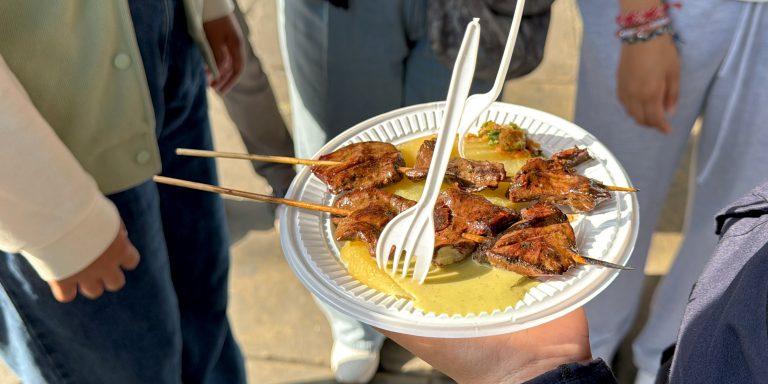
- Anticuchos — Grilled skewers traditionally associated with Peruvian street food. The classic version is made with beef heart.
- Picarones — Sweet fried rings traditionally made with ingredients such as squash and sweet potato, usually served with syrup.
- Pan con chicharrón — A popular combination of pork, sweet potato and salsa criolla served inside bread.
- Choclo con queso — Large-kernel Peruvian corn served with cheese. Simple, but a classic combination.
- Chicha morada — A traditional purple corn drink, commonly prepared with fruit and spices.
- Lúcuma — A native fruit with a distinctive sweet flavor that Peruvians often enjoy in desserts, ice cream and drinks.
The advantage of trying smaller portions throughout the afternoon is that you don’t have to choose just one Peruvian dish. You can compare different flavors and discover what you actually like.
Visit a Local Market
If food tells part of Lima’s story, a market lets you see many of its ingredients before they reach the plate.
Inside local markets you’ll find colorful displays of fruit, vegetables, herbs, spices and products used in Peruvian cooking.
For international travelers, the fruit section can be particularly interesting. Peru has fruits and varieties that may be completely unfamiliar depending on where you’re visiting from. But visiting a market isn’t only about trying something unusual.
It’s also an opportunity to see an everyday side of the city: vendors working, locals shopping for ingredients and foods that form part of daily life in Lima.
Having someone explain what you’re looking at can make a big difference. Instead of seeing an unfamiliar fruit and walking past it, you learn its name, how Peruvians use it and, when possible, what it tastes like.
Does Lima Have a Chinatown?
Yes, Lima has its own Chinatown, known locally as Barrio Chino, located in the Historic Center near the Central Market.
Walking through the neighborhood, you’ll find Chinese-Peruvian restaurants, shops and businesses, as well as the famous Calle Capón, one of the best-known streets in the area.
But Chinatown is more than just a place to stop for food. It represents an important chapter in Peru’s cultural and culinary history.
Chinese migration to Peru increased significantly during the 19th century. Over time, Chinese cooking traditions mixed with local ingredients and Peruvian tastes, helping create what Peruvians now call chifa.
Chifa isn’t simply Chinese food served in Peru. It developed its own identity through this cultural exchange and today is a familiar part of everyday Peruvian cuisine.
Visiting Barrio Chino gives you the chance to see this connection firsthand — and, of course, try some Chinese-Peruvian flavors along the way.
It’s another example of how exploring Lima through food can also help you understand the city’s history.

Explore Lima’s Historic Center
After markets and food, continue through the Historic Center of Lima.
Founded by the Spanish in 1535, this part of the city contains plazas, churches, balconies and historic buildings that reflect centuries of political, religious and social history.
Walking through Downtown Lima can feel completely different from spending the morning beside the ocean in Miraflores or among the colorful streets of Barranco.
That’s exactly why both areas are worth experiencing.
Plaza Mayor
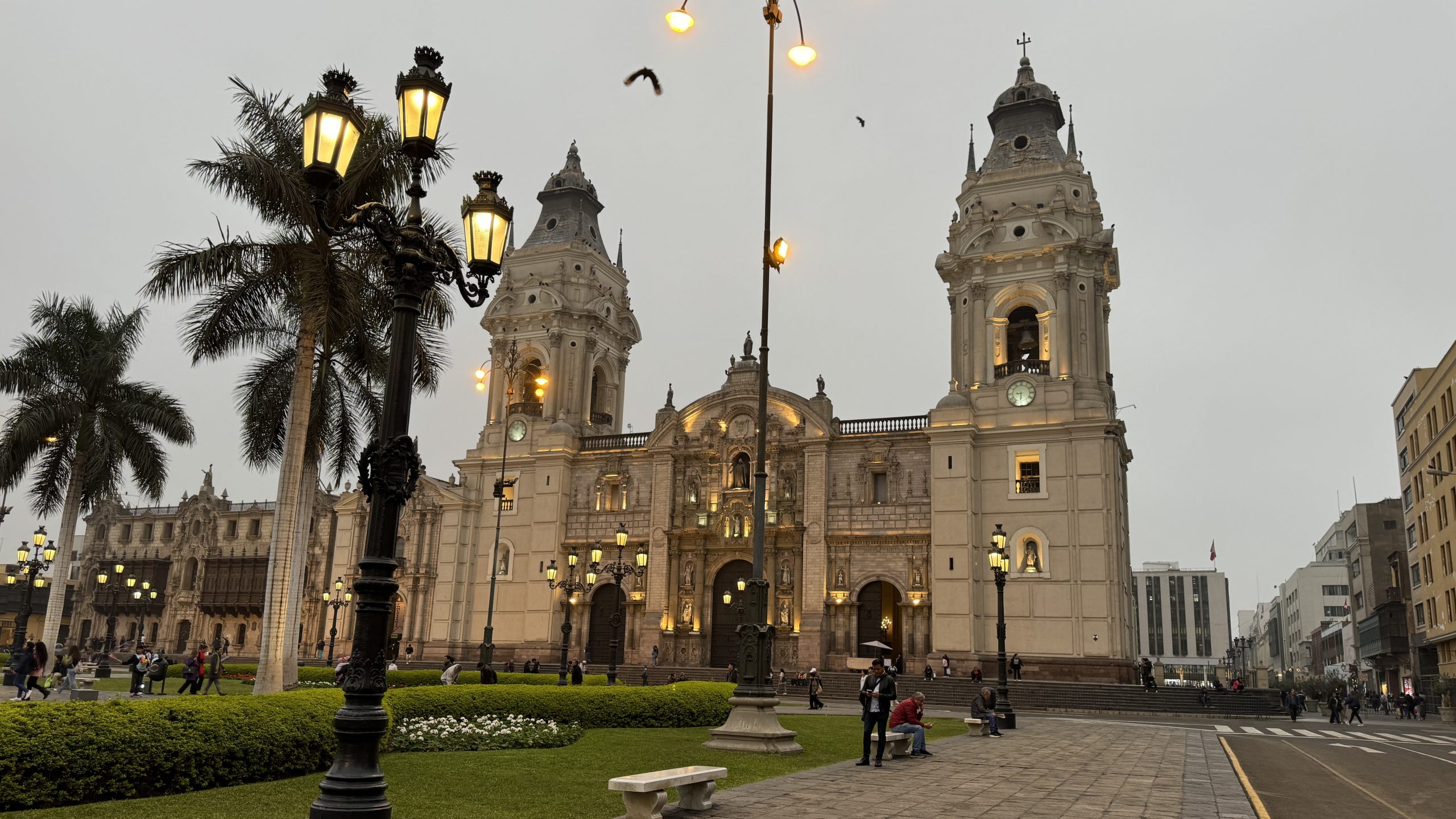
At the center of historic Lima is Plaza Mayor, also known as Plaza de Armas.
The square has been at the center of major moments in Lima’s history since the colonial period. Today it is surrounded by some of the city’s most recognizable buildings, including the Government Palace, Lima Cathedral and the Municipal Palace.
Take some time to look around rather than simply stopping for a photo.
The architecture and surrounding streets offer clues to how Lima developed from a colonial capital into the enormous modern city you see today.
San Francisco and the Catacombs
Not far from Plaza Mayor is the San Francisco Church and Convent, one of the best-known historic religious complexes in Lima.
Beneath it are the famous catacombs, which were used for burials during the colonial period.
Today, visitors can walk through sections of the underground complex and see human remains that have survived for centuries.
If history interests you and you have enough time, San Francisco can be a fascinating addition to your visit to Downtown Lima.
Casa de la Literatura Peruana
Another interesting stop is the Casa de la Literatura Peruana, housed inside Lima’s former Desamparados train station.
The building itself is worth seeing, but the exhibitions also provide an introduction to Peruvian literature, languages and cultural diversity.
It can be a useful stop for travelers who want to understand Peru beyond its most famous tourist attractions.
Food Tour or City Tour: What If You Don’t Have to Choose?
This is one of the biggest decisions travelers face when they have limited time.
Do you spend the afternoon trying Peruvian food? Or do you use those hours to explore Downtown Lima? You can actually do both.
Our Lima Food & City Tour combines food, markets, local culture and the Historic Center into one experience.
In approximately five hours, you can try up to 12 Peruvian snacks and drinks while walking through different parts of central Lima.
Rather than sitting in one restaurant for the entire experience, you’ll move through the city, visit local food stops and markets, explore Chinatown and continue toward the Historic Center.
Along the way, your local guide explains not only what you’re tasting but also the history and culture connected to the places you’re visiting.
It means you can taste ceviche and traditional snacks, discover local fruits, learn why Lima has a Chinatown and explore some of Downtown Lima’s most important places — all during the same experience.
Our tours operate every day, making this an easy option to include in a short stay.
Why Explore Lima With a Local Guide?
You can absolutely explore Lima independently. But there’s a difference between seeing a place and understanding what you’re seeing.
You might walk past a fruit you’ve never seen before, a historic building or a food stall selling something completely unfamiliar without realizing there is a story behind it.
That’s where a knowledgeable local guide can make a difference.
At Lima Experience, our local guides are experienced in sharing Lima’s history, culture and food with travelers from around the world. Throughout the tour, they explain the stories behind the places you visit, introduce you to local flavors and help you understand how Lima’s history and different cultural influences have shaped the city you see today.
And because you’re exploring with a guide, you can ask questions along the way: What exactly am I eating? Why is this dish popular in Peru? What’s the story behind this building? How did this neighborhood become what it is today?
Rather than simply moving from one attraction to another, you’ll leave with a better understanding of the city, its food and its people.
Sometimes, those conversations and small discoveries become just as memorable as the places themselves.


Make Your Day in Lima Count
A short stay doesn’t have to mean seeing Lima through the window of a taxi or rushing from one attraction to another.
Walk through a local market. Try something you’ve never eaten before. Discover how migration shaped Peruvian cuisine. Listen to the stories behind the buildings in Downtown Lima. That’s when the city starts to make sense.
And if you don’t want to choose between trying local food and exploring the city, our Lima Food & City Tour lets you experience both.
Spend approximately five hours tasting up to 12 Peruvian snacks and drinks, exploring markets, discovering Chinatown and walking through Lima’s Historic Center with a local guide. Tours available every day.
📲 Ask us a question: +51 925 177 277
📌 Book our tour here -> https://limaexperience.com/product/lima-tour-downtown-and-market-food-experience/
📽️ Watch our video: https://www.instagram.com/p/DeQWAoPjPdu/